Video
Revitalizing Indigenous Knowledge and Medicine
Nurturing Health and Cultural Resilience
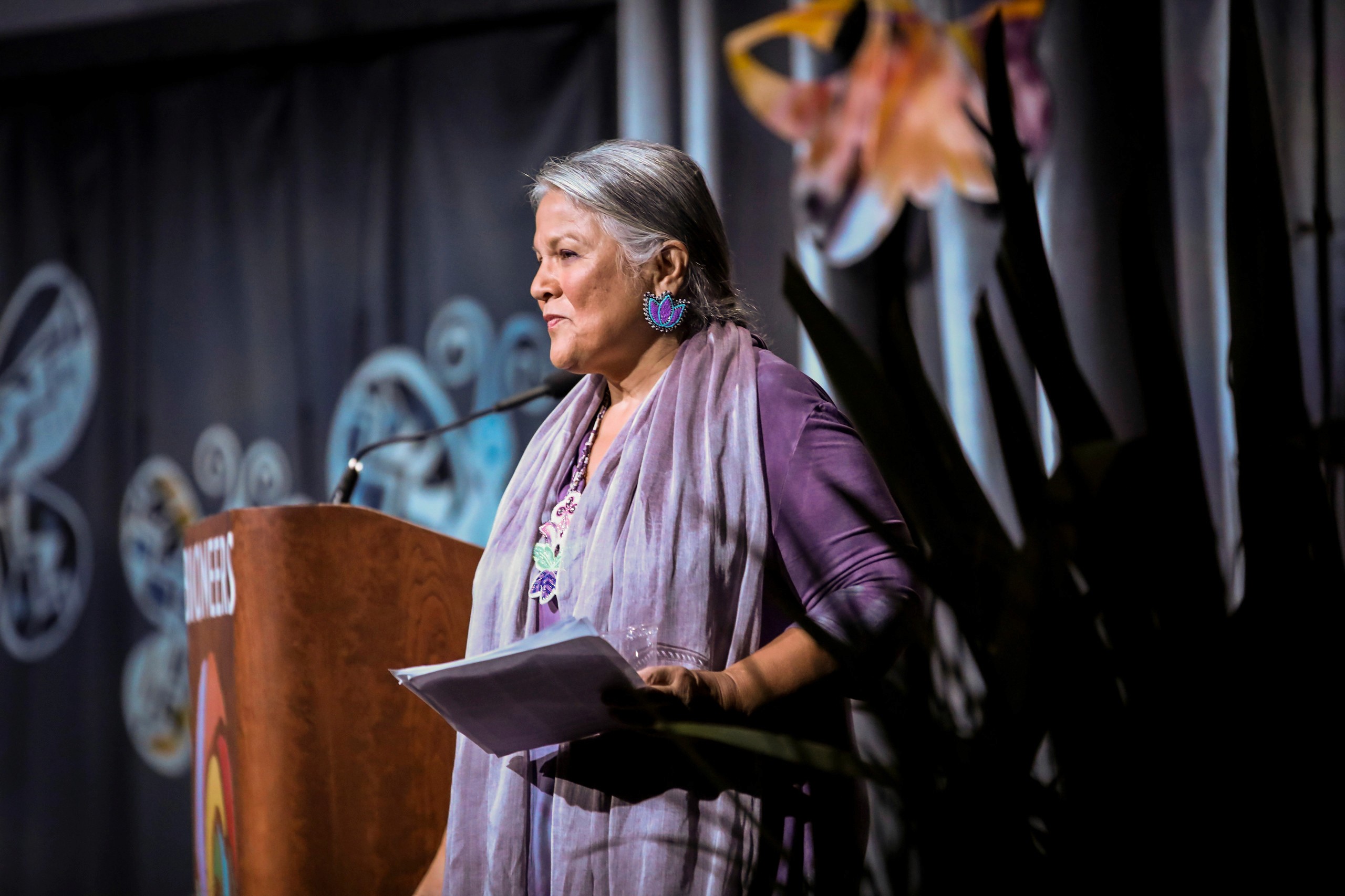
Katsi Cook, a wolf clan Mohawk, is a prominent midwife, environmentalist, and women’s health advocate known for her impactful work in the Mohawk Nation at Akwesasne. Born on the St. Regis Mohawk Reservation in 1952, she embraced traditional practices after attending Catholic boarding school and later became a trailblazer at Dartmouth College. Cook’s passion for midwifery was ignited at the Loon Lake Conference in 1977, driving her to address reproductive health and environmental justice issues. Founder of organizations like the Women’s Dance Health Program, she tackled PCB contamination in the St. Lawrence River. Cook’s influence extends globally, collaborating with Mayan midwives and founding the Six Nations Birthing Centre in Canada. A respected academic, she held positions at SUNY Albany and Dalhousie University. As the Program Director of Running Strong for American Indian Youth, Cook continues to empower Native women through community-based health projects. Her dedication makes her a key figure in indigenous rights, environmentalism, and women’s health.
In this talk, she shares, among other topics, a deeply edifying look at the cultural context of Native American plant use in general and then of peyote use. Her descriptions of indigenous views of plants and their relationships to humans and how crucial a deep respect for the spirits of other species is in such relationships offer the non-indigenous among us very important cautions about the risks of arrogant and disrespectful use of plant medicines and sacraments (not to mention most other species and the entire biosphere!). Her accounts of her own cross-cultural, pan-tribal plant knowledge learning process and of the use of peyote in childbirth are also fascinating, especially since these are rarely discussed topics.
Video
Revitalizing Indigenous Knowledge and Medicine
Nurturing Health and Cultural Resilience
Katsi Cook, a wolf clan Mohawk, is a prominent midwife, environmentalist, and women’s health advocate known for her impactful work in the Mohawk Nation at Akwesasne. Born on the St. Regis Mohawk Reservation in 1952, she embraced traditional practices after attending Catholic boarding school and later became a trailblazer at Dartmouth College. Cook’s passion for midwifery was ignited at the Loon Lake Conference in 1977, driving her to address reproductive health and environmental justice issues. Founder of organizations like the Women’s Dance Health Program, she tackled PCB contamination in the St. Lawrence River. Cook’s influence extends globally, collaborating with Mayan midwives and founding the Six Nations Birthing Centre in Canada. A respected academic, she held positions at SUNY Albany and Dalhousie University. As the Program Director of Running Strong for American Indian Youth, Cook continues to empower Native women through community-based health projects. Her dedication makes her a key figure in indigenous rights, environmentalism, and women’s health.
In this talk, she shares, among other topics, a deeply edifying look at the cultural context of Native American plant use in general and then of peyote use. Her descriptions of indigenous views of plants and their relationships to humans and how crucial a deep respect for the spirits of other species is in such relationships offer the non-indigenous among us very important cautions about the risks of arrogant and disrespectful use of plant medicines and sacraments (not to mention most other species and the entire biosphere!). Her accounts of her own cross-cultural, pan-tribal plant knowledge learning process and of the use of peyote in childbirth are also fascinating, especially since these are rarely discussed topics.